The official recommendation of 0.8 grams per kilo is enough to survive, not to age well. How much protein muscles, satiety and metabolism really need, how to spread it across the day and which sources count.
In short
- 1.2 to 1.6 grams of protein per kilo of body weight a day make sense for adults, from 65 and when losing weight rather 1.6.
- Distribution counts: 25 to 40 grams per meal, three to four times a day, instead of one large portion in the evening.
- Combine animal and plant sources; legumes, soy, skyr, eggs, fish, poultry are the most efficient.
- Protein satiates most strongly of all nutrients and protects muscle during weight loss.
Why 0.8 grams is too little
The recommendation of 0.8 grams of protein per kilo of body weight comes from nitrogen balance studies and describes the minimum to avoid deficiency. It says nothing about how much protein preserves muscle, protects it during weight loss or counters muscle loss in old age. For that, studies have shown values of 1.2 to 1.6 grams for twenty years, with strength training and from age 65 up to 1.8. For a 75-kilo person that is 90 to 120 grams a day, clearly more than most people eat.
Distribution across the day
Muscle protein synthesis can only be stimulated to a limited extent per meal: about 25 to 40 grams of protein trigger the maximum stimulus, more brings little in that meal. So it makes sense to spread protein over three to four meals instead of eating a jam sandwich in the morning and 200 grams of meat in the evening. Breakfast is the meal where most is missing: 25 to 30 grams there, roughly three eggs, 250 grams of skyr or 200 grams of tofu, measurably change satiety and muscle.
Where it should come from
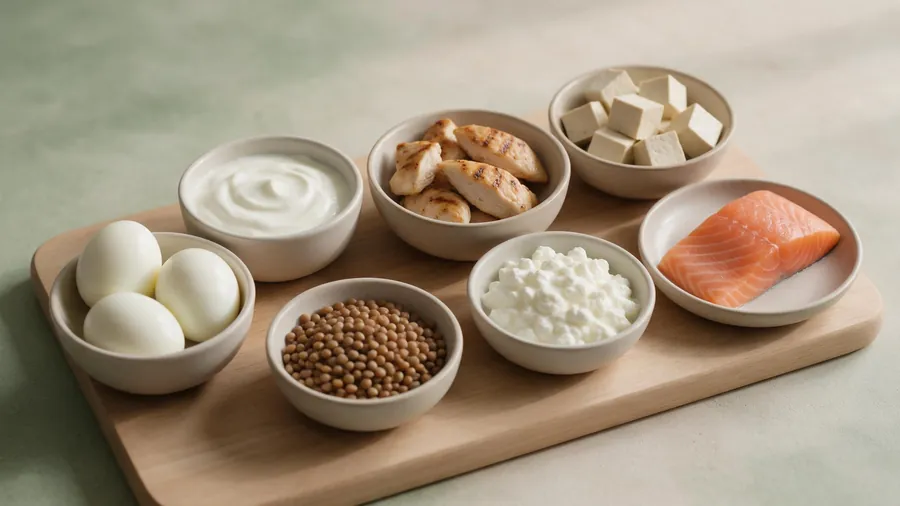
Animal protein is complete and well absorbed: eggs, fish, poultry, lean meat, dairy, especially skyr, quark and cottage cheese. Plant protein needs combination and quantity: lentils, chickpeas, beans, tofu, tempeh, edamame, seitan, oats, nuts. Soy is the most complete plant source. Whoever eats mostly plants counts on 10 to 20 percent more because absorption is somewhat lower. Protein powder is not a must but a practical addition when a meal would otherwise stay empty.
Protein and weight loss
Protein satiates more than fat and carbohydrates, costs more energy to digest and protects muscle during a calorie deficit. People who eat 1.6 grams per kilo while losing weight lose almost exclusively fat; whoever stays at 0.8 loses up to a third as muscle. That is why low-protein diets lower basal metabolic rate and the yo-yo effect follows.
Is too much protein harmful?
Not for healthy kidneys: studies up to 2 grams per kilo show no damage. With existing kidney disease a limit set by the doctor applies. The practical advice: limit red and processed meat, not protein. Fish, poultry, eggs, dairy and legumes carry the amount without the drawbacks.
Try it
Protein CalculatorWeight, goal and activity: how much protein you need a day, how to spread it across meals and where it comes from.Calorie CalculatorHeight, weight, age, activity: your basal metabolic rate, your daily needs and the calories to lose, maintain or gain.Weight Loss PlannerCurrent weight, target weight, pace: when you arrive, how many calories that means and how to keep muscle along the way.Frequently asked questions
Do I need protein powder?
No, but it is practical. 30 grams of whey or pea protein in water or milk covers a meal that would otherwise be only carbohydrates. Food remains the better base.
Is plant protein equivalent?
In combination yes. Soy, lentils with rice, beans with corn, oats with nuts give complete amino acid profiles. The amount needs to be somewhat higher.
How much protein is in an egg?
About 7 grams. 100 grams of chicken breast have 23, 100 grams of skyr 11, 100 grams of cooked lentils 9, 100 grams of tofu 12, 100 grams of salmon 20 grams.
This article is general information and not medical advice. If you have symptoms or existing conditions, or before changing any medication, talk to your doctor.
Share