The gut flora steers immune system, metabolism and mood, and it lives on fiber. Why 30 grams a day is the target, where it comes from and how to reach it without your stomach rebelling.
In short
- 30 grams of fiber a day lower cardiovascular death, bowel cancer and diabetes; the average lies at 15 to 20.
- Fiber feeds the gut bacteria that turn it into short-chain fatty acids: fuel for the gut wall and a brake on inflammation.
- The sources: legumes, whole grains, oats, vegetables, fruit with skin, nuts, seeds.
- Increase slowly, drink plenty, variety over quantity: 30 different plants a week.
Why 30 grams
Large reviews show: people who eat 25 to 30 grams of fiber a day have a 15 to 30 percent lower risk of cardiovascular death, bowel cancer, type 2 diabetes and stroke than people under 15 grams. The average in the United States lies at 15 grams, in Europe at 20. It is the nutrient with the largest gap between recommendation and reality.
What happens in the gut
Fiber consists of plant fibers the small intestine does not digest. In the colon they are fermented by bacteria that make short-chain fatty acids like butyrate from them. Butyrate is the fuel of the gut lining, keeps the gut wall tight, dampens inflammation, improves insulin sensitivity and acts via the gut-brain axis on mood and appetite. Without fiber the good bacteria starve and the gut flora becomes impoverished.
Where it comes from
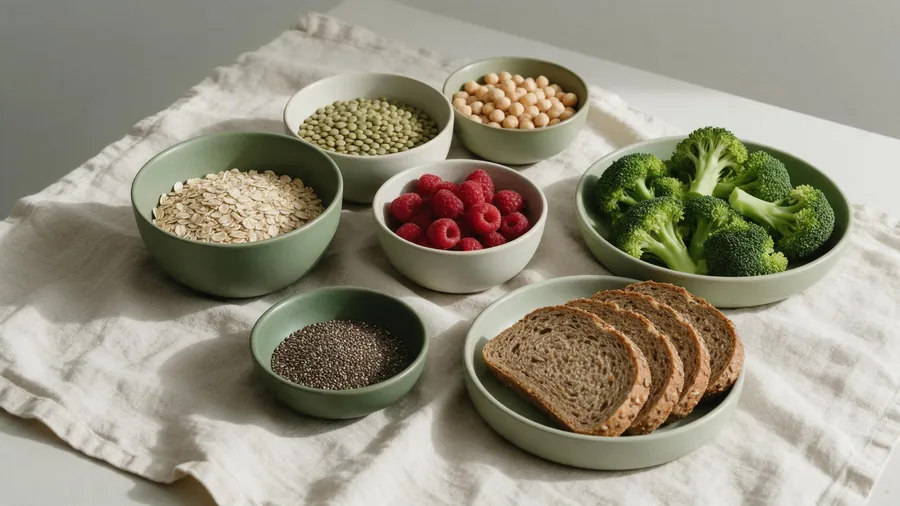
100 grams of cooked lentils deliver 8 grams, chickpeas 7, white beans 7. 50 grams of oats 5. A slice of whole grain bread 3 to 4. 100 grams of broccoli 3, carrots 3, Brussels sprouts 4. An apple with skin 3, a pear 3, 100 grams of raspberries 7. 30 grams of almonds 4, a tablespoon of flaxseed 3, a tablespoon of chia seeds 4. Whoever eats oats with berries and flaxseed in the morning, lentils at midday and vegetables with whole grains in the evening sits at 35 grams.
Variety counts
A large microbiome project found: people who eat 30 different plants a week have a more diverse gut flora than people with ten, regardless of quantity. Plants means everything: vegetables, fruit, legumes, grains, nuts, seeds, herbs, spices. A curry with ten ingredients counts ten. Variety is easier to reach than it sounds if you count spices and herbs.
The transition without bloating
Whoever jumps from 15 to 30 grams gets bloated because the bacteria that process the fibers are not there yet. So: 5 grams more per week, plenty of water, legumes in small portions at first, whole grains introduced step by step. After three to four weeks the flora has adjusted and the stomach is calm.
Try it
Protein CalculatorWeight, goal and activity: how much protein you need a day, how to spread it across meals and where it comes from.Sugar CalculatorTap the drinks and foods of one day: how many sugar cubes that is and how far you are above the WHO recommendation.Blood Test CheckCholesterol, LDL, HDL, triglycerides, glucose, HbA1c, vitamin D, ferritin, TSH, CRP, blood pressure: each value with a traffic light and explanation.Frequently asked questions
Are fiber supplements useful?
Psyllium husks or inulin can help but are only one kind of fiber. The variety from food brings more, because different bacteria need different fibers.
What about probiotics?
Yogurt, kefir, sauerkraut and kimchi deliver live bacteria and make sense. Capsules show benefit in studies only for specific complaints. More important than new bacteria is food for the existing ones.
Does whole grain harm with irritable bowel?
Some fibers, especially certain sugars in wheat, onions and legumes, can worsen irritable bowel. Then oats, rice, quinoa and a guided dietary change help instead of giving up all fiber.
This article is general information and not medical advice. If you have symptoms or existing conditions, or before changing any medication, talk to your doctor.
Share