Cold water has gone from niche ritual to mass phenomenon. What cold does to the nervous system, mood, brown fat and inflammation, what is proven and what exaggerated, how to start safely and why cold after strength training is counterproductive.
In short
- Cold water triggers a release of noradrenaline and dopamine that lifts mood and alertness for hours.
- Proven: mood, stress resilience, fewer sick days, slight activation of brown fat; not proven: weight loss, detox, immune boosting.
- Start with 30 seconds cold at the end of the shower, increase to two to three minutes; ice bath at 10 to 15 degrees Celsius for two to five minutes.
- Never alone in open water, never with alcohol, not with heart problems without consulting a doctor, and not right after strength training.
What cold triggers in the body
Cold water on the skin is an alarm: the sympathetic nervous system fires, noradrenaline rises two- to threefold, dopamine by up to 250 percent, and both stay elevated for hours. That explains the alertness and the good mood cold bathers describe, and the studies confirm it: regular cold showers improve mood in trials and cut sick days by 29 percent in a Dutch study with 3,000 participants. Heart rate rises at first, breathing gets shallow, and the ability to keep breathing calmly in that moment is the real training: stress resilience.
Brown fat and inflammation
Brown fat tissue produces heat by burning calories, and cold activates it. The effect is real but small: 50 to 100 calories a day with regular exposure, no path to weight loss. Cold acutely lowers inflammation markers and swelling, which is why athletes use it after competitions. The catch: after strength training an ice bath dampens the inflammation the muscle needs for its adaptation and measurably reduces muscle growth in studies. So cold not in the hours after strength training, but in the morning, on rest days or after endurance.
What is exaggerated
Cold does not detoxify, cures no depression, replaces no training and does not strengthen the immune system in the sense of more defense cells; the effect on sick days probably comes via stress resilience and behavior. Wim Hof breathing with hyperventilation is a separate topic and dangerous in water. Whoever likes cold has a good tool for mood and discipline; whoever hates it misses nothing that sauna, sport and sleep do not also deliver.
Starting safely
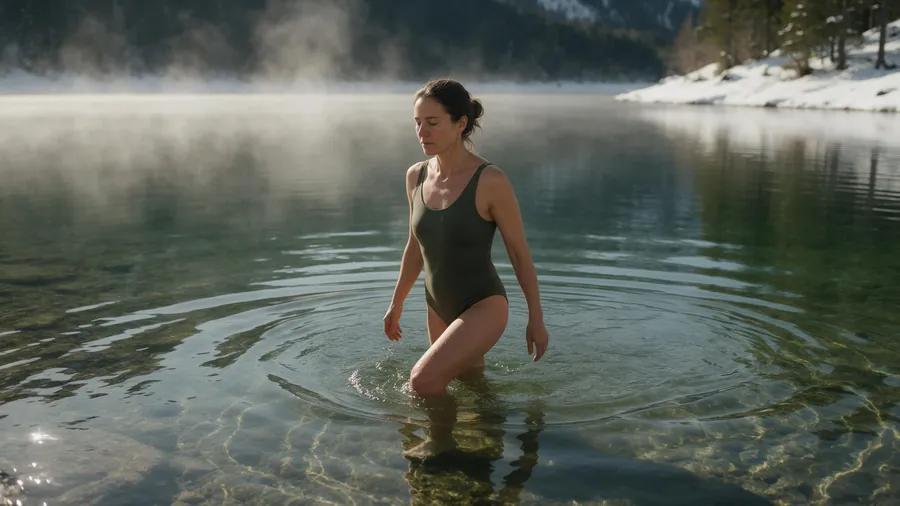
The cold shower: 30 seconds cold at the end of the warm shower, breathe calmly through the nose, 15 seconds more each week up to two to three minutes. The ice bath: water at 10 to 15 degrees Celsius, two to five minutes, keep hands out if it gets too much, in slowly, out slowly. The lake in winter: only in pairs, only with experience, only briefly, with dry clothes and a warm drink on the shore, never with alcohol. The cold shock of the first seconds is the most dangerous phase because it can lead to inhaling water.
Who needs caution
Cold briefly drives blood pressure and pulse up sharply. With heart disease, arrhythmias, uncontrolled high blood pressure, Raynaud’s syndrome and in pregnancy talk to the doctor first. Whoever does not feel warm again within 30 minutes after the bath stayed in too long.
Try it
Stress CheckTen questions about sleep, irritability, recovery and drive: your stress score with classification and three concrete countermeasures.Heart Rate ZonesAge and resting pulse: your maximum heart rate and the five training zones after Karvonen, with zone 2 as the fat-burning range.Longevity ScoreTwelve questions about sleep, movement, food, stress and habits: your estimated biological age and the three levers with the biggest effect.Frequently asked questions
How cold does the water have to be?
Cold enough to be uncomfortable, 10 to 15 degrees Celsius for the bath, normal cold tap water for the shower. Colder brings no more, only more risk.
Morning or evening?
Morning. Cold wakes you up and raises noradrenaline for hours, in the evening that disturbs sleep. After endurance training is also possible.
Do you lose weight with cold?
No, the calorie effect is minimal. Cold is good for mood and stress resilience, for weight diet and training are responsible.
This article is general information and not medical advice. If you have symptoms or existing conditions, or before changing any medication, talk to your doctor.
Share