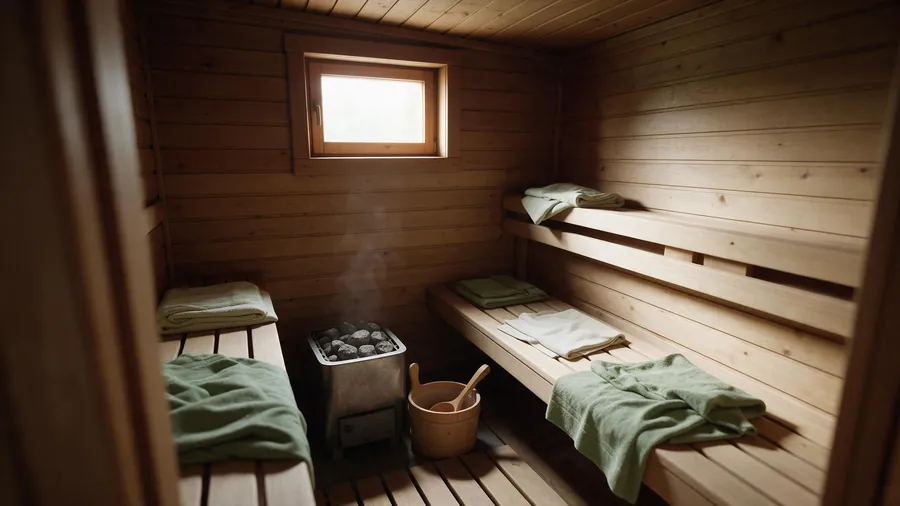
Finns who go to the sauna four to seven times a week die far less often of cardiovascular disease and dementia in long-term studies. What heat triggers in the body, how often and how long makes sense, what sauna cannot do and who needs caution.
In short
- Regular sauna, four times a week or more, is linked in the Finnish Kuopio study with 40 percent less cardiovascular death and 65 percent less dementia.
- Heat works like endurance training: pulse to 120 to 150, vessels widen, blood pressure falls afterwards, heat shock proteins repair cells.
- Two to three rounds of 10 to 20 minutes at 80 to 90 degrees Celsius, then cool down and drink.
- Caution with unstable heart disease, recent heart attack, pregnancy, alcohol and acute infection.
The Finnish data
The Kuopio Ischaemic Heart Disease Study followed over 2,300 Finnish men for twenty years. Whoever went to the sauna four to seven times a week had a 40 percent lower risk of dying from cardiovascular disease than men with one session a week, and a 65 percent lower dementia risk. The effects were dose-dependent: more sauna, less risk, and longer sessions over 19 minutes worked more strongly than short ones. Observational studies prove no cause, but the physiology fits.
What heat does in the body
In the sauna core temperature rises by one to two degrees, pulse to 120 to 150, the heart pumps as in moderate endurance training, vessels widen and become more elastic. After the session blood pressure falls for hours. Heat shock proteins are released that repair and fold damaged proteins in cells, a mechanism linked with longevity. Growth hormone rises, inflammation markers fall, the brain releases endorphins and BDNF, the growth factor for nerve cells. And sleep the following night is deeper because body temperature falls more sharply afterwards.
How often, how long, how hot
The Finnish standard: 80 to 100 degrees Celsius, two to three rounds of 10 to 20 minutes, cooling in between in the air, under the shower or in the lake, and drinking. Two to three times a week is a realistic goal with a clear effect, more is better if it fits. Infrared cabins at 45 to 60 degrees work more gently, the data are thinner, the direction the same. What matters is regularity over years, not the single session.
What sauna cannot do
It does not detoxify; sweat is water and salt, toxins are processed by the liver. It burns no fat, the weight afterwards is water loss. It replaces no training, though it complements it: whoever combines both has the lowest risks in the Finnish data. And it cures no cold but adds load to the circulation; with fever and acute infection you stay out.
Who needs caution
With unstable angina, recent heart attack, severe heart failure, uncontrolled high blood pressure and arrhythmias talk to the doctor first; stable heart patients benefit after medical clearance. Pregnant women avoid high temperatures in the first trimester. Alcohol before or in the sauna is the most common cause of sauna deaths because it weakens circulation and judgment. After the session stand up slowly because blood pressure drops.
Try it
Heart Rate ZonesAge and resting pulse: your maximum heart rate and the five training zones after Karvonen, with zone 2 as the fat-burning range.Longevity ScoreTwelve questions about sleep, movement, food, stress and habits: your estimated biological age and the three levers with the biggest effect.Sleep CalculatorWhen do you have to get up? The best bedtimes by 90-minute cycles, or the other way round: when you should wake up.Frequently asked questions
Sauna or sport if I only have time for one?
Sport. Sauna complements but replaces neither strength nor endurance. Whoever manages both has the largest effect.
How much should I drink?
A large glass of water before and after each round, on a sauna evening one to one and a half liters extra. Alcohol only afterwards, if at all.
Is sauna good for the skin?
Circulation rises, pores open, many perceive the skin as clearer afterwards. With rosacea and eczema heat can irritate; then shorter and less hot.
This article is general information and not medical advice. If you have symptoms or existing conditions, or before changing any medication, talk to your doctor.
Share