Every third adult has high blood pressure, half do not know it. What the numbers mean, how to measure correctly, which five measures lower pressure by 10 to 20 mmHg and when medication is the better choice.
In short
- Optimal is under 120/80, normal up to 129/84, from 140/90 counts as hypertension, measured as the average over several days at home.
- Cutting salt, losing weight, endurance, less alcohol and potassium from vegetables together bring 10 to 20 mmHg.
- Sleep deprivation, snoring with breathing pauses and chronic stress drive pressure and are often overlooked.
- From 140/90 despite lifestyle, medication makes sense: it is well tolerated and prevents strokes.
What the numbers mean
The upper value, systolic, is the pressure at the heartbeat, the lower, diastolic, the pressure in between. Optimal is under 120/80 mmHg, normal up to 129/84, high-normal up to 139/89, from 140/90 counts as hypertension. Every rise of 20/10 doubles the risk of heart attack and stroke. High blood pressure does not hurt, which is why half of those affected know nothing about it, and why it is the most common preventable cause of death in the world.
Measuring correctly
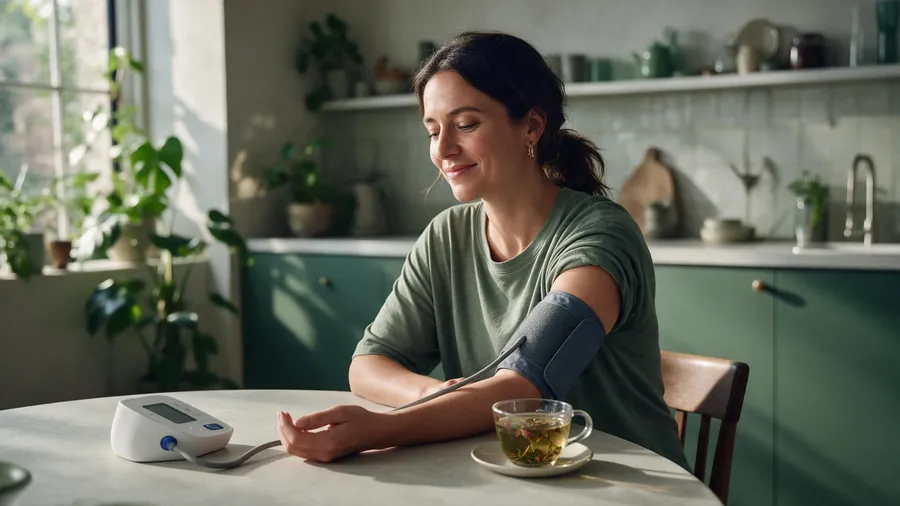
At home, with an upper-arm device, in the morning before coffee and medication and in the evening, each after five minutes of sitting, twice one minute apart. Seven days, discard the first day, average the rest. The value at the doctor’s is often 10 mmHg higher, that is the white-coat effect. Whoever averages above 135/85 at home has hypertension.
Five measures that measurably work
Cut salt to under 5 grams a day, which brings 5 to 8 mmHg; the biggest sources are bread, sausage, cheese and ready meals, not the salt shaker. Raise potassium from vegetables, fruit, legumes and potatoes, which offsets salt and brings another 4 to 5. Weight: every kilo less lowers pressure by about 1 mmHg, so ten kilos 10. Endurance: 150 minutes a week in zone 2 bring 5 to 8 mmHg, isometric training like wall sits three times a week even more in studies. Alcohol under two glasses a week lowers pressure in drinkers by 4 to 6 mmHg.
The overlooked drivers
Sleep under six hours raises pressure permanently. Sleep apnea, meaning snoring with breathing pauses, is the most common unrecognized cause of treatment-resistant hypertension; whoever snores loudly and is tired in the day belongs in a sleep lab. Chronic stress keeps the sympathetic nervous system active; breathing exercises at six breaths per minute lower pressure in studies by 3 to 5 mmHg. Painkillers like ibuprofen, licorice and some nasal sprays drive it too.
When medication
If pressure stays above 140/90 after three to six months of lifestyle change or sits above 160/100 from the start, medication makes sense. ACE inhibitors, sartans, calcium antagonists and diuretics have been proven for decades, are well tolerated and demonstrably prevent strokes and heart attacks. Whoever takes them should change lifestyle anyway: often the dose can be lowered later.
Try it
Blood Test CheckCholesterol, LDL, HDL, triglycerides, glucose, HbA1c, vitamin D, ferritin, TSH, CRP, blood pressure: each value with a traffic light and explanation.Blood Alcohol CalculatorDrinks, weight, sex, time: your blood alcohol after Widmark, when you are sober again and what the evening costs your sleep.Heart Rate ZonesAge and resting pulse: your maximum heart rate and the five training zones after Karvonen, with zone 2 as the fat-burning range.Frequently asked questions
Which monitor is good?
An upper-arm device with clinical validation; the hypertension societies keep lists. Wrist devices are less accurate. The cuff must fit the arm circumference.
Does coffee raise or lower pressure?
Short-term, caffeine raises pressure by 5 to 10 mmHg for one to two hours. Regular drinkers adapt, and studies show no long-term rise. Pause an hour before measuring.
Do I have to take pills forever?
Not necessarily. Whoever loses significant weight, cuts salt and alcohol and trains can often lower or stop the dose, under medical supervision.
This article is general information and not medical advice. If you have symptoms or existing conditions, or before changing any medication, talk to your doctor.
Share