It is not the hours in bed that count but the hours asleep. Which ten rules demonstrably improve falling asleep, staying asleep and deep sleep, in which order to introduce them and what to drop with sleep problems.
In short
- A fixed wake-up time, morning light and a cool, dark bedroom are the three strongest levers.
- Caffeine after 2 pm, alcohol in the evening and late heavy meals are the three most common disruptors.
- Use the bed only for sleeping; whoever lies awake gets up and returns only when tired.
- With sleep problems over three months, cognitive behavioral therapy for insomnia works better than any pill.
Why quality beats length
Eight hours in bed with three awakenings and little deep sleep restore less than seven hours in one stretch. Sleep quality means: fall asleep in under 20 minutes, wake up briefly at most once, sleep at least 85 percent of the time in bed and be rested in the morning with or without an alarm. These four things can be influenced far more with behavior and environment than with any supplement.
The ten rules
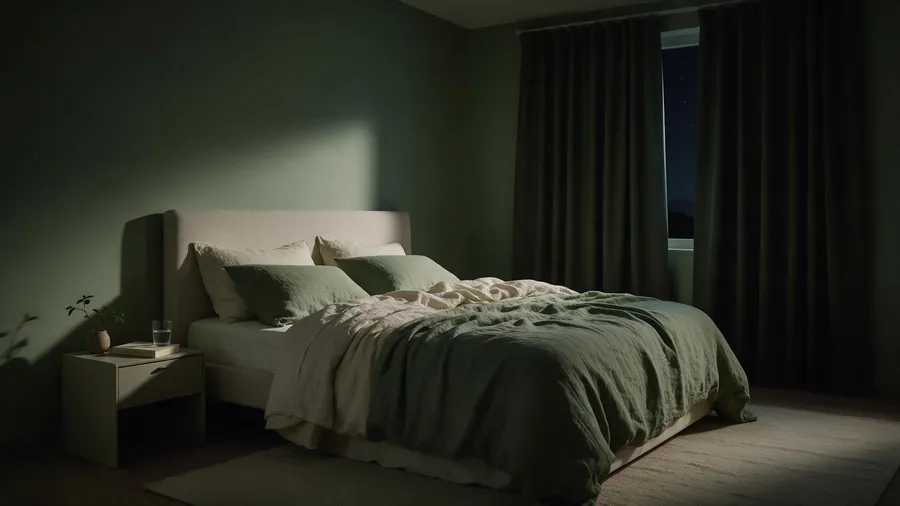
First, a fixed wake-up time, seven days a week, with at most one hour of deviation; it is the anchor of the inner clock. Second, morning light, ten minutes outside within the first hour. Third, caffeine only until early afternoon; the half-life is five hours, a coffee at 4 pm still works at half strength at 9 pm. Fourth, no alcohol as a sleep aid: it shortens the time to fall asleep but destroys deep and REM sleep and wakes you in the second half of the night. Fifth, dinner three hours before bed, light, with protein and vegetables. Sixth, a cool bedroom at 17 to 19 degrees Celsius, dark with curtains or a mask, quiet with earplugs if needed. Seventh, screens off or dimmed from 9 pm; the light is only part of it, the content keeps you awake. Eighth, movement during the day, but no hard training in the last two hours. Ninth, an evening ritual, 30 minutes the same: dim the lights, read, stretch, tea, notes. Tenth, the bed only for sleeping: whoever lies awake after 20 minutes gets up, reads in dim light and returns only when tired.
The order
Not all ten at once. Week one: wake-up time and morning light. Week two: caffeine and alcohol. Week three: bedroom and dinner. Week four: ritual and screens. Whoever does not sleep better after four weeks keeps a sleep diary for two weeks and takes it to the doctor.
What to drop
Sleeping pills as a permanent solution: they produce sleep that is not deep sleep and cause dependence. Catching up at the weekend: it shifts the clock and makes Monday worse. Waiting for sleep in bed: it conditions the bed to wakefulness. And sleep trackers as judges: whoever checks the score in the morning sleeps worse.
When nothing helps
Whoever sleeps badly on at least three nights a week for over three months has insomnia. The most effective treatment is cognitive behavioral therapy for insomnia, CBT-I, with sleep restriction, stimulus control and work on thoughts. In studies it works better and more durably than medication and is also offered digitally.
Try it
Sleep CalculatorWhen do you have to get up? The best bedtimes by 90-minute cycles, or the other way round: when you should wake up.Caffeine CalculatorCoffee, espresso, tea, cola, energy drink with time: how much caffeine is still in your blood at bedtime, as a curve.Stress CheckTen questions about sleep, irritability, recovery and drive: your stress score with classification and three concrete countermeasures.Frequently asked questions
How much sleep do I really need?
Most adults seven to eight hours. Whoever wakes without an alarm after six and is fit during the day belongs to the small group of short sleepers. Whoever gets up with an alarm on weekdays and sleeps two hours longer at the weekend has a deficit.
Do melatonin supplements help?
For jet lag and shift work yes, in small doses of 0.5 to 1 milligram. For normal trouble falling asleep the effect is small; the rules above work more strongly.
Is a nap bad for the night?
Twenty minutes before 3 pm, no. Longer or later takes sleep pressure away from the night. Whoever sleeps badly at night skips the nap for now.
This article is general information and not medical advice. If you have symptoms or existing conditions, or before changing any medication, talk to your doctor.
Share


